


What is Black Tea
When British people say, “a cup of tea”, they generally mean a cup of black tea. It’s the foundation of the UK’s obsession with a good brew – often taken with milk and maybe a bit of sugar.
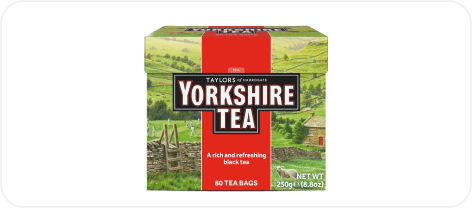
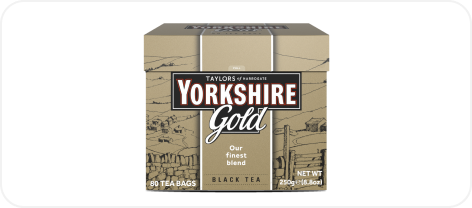
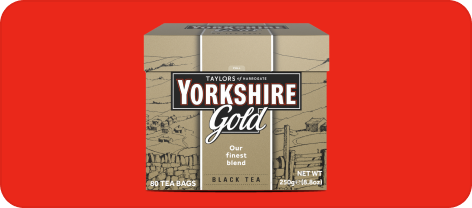
Yorkshire Tea is black tea… and so’s Yorkshire Gold, Yorkshire Tea Decaf, Biscuit Brew, and pretty much everything else we make! So, on this page, we’re going to take a look into exactly what black tea is, how it tastes and where its origins lie.
Where does black tea come from?
Whether it’s black, green or oolong, all tea comes from the Camellia Sinensis bush. It grows wherever the climate is right (like Africa and India) and once it’s been picked, the leaves are then processed.
For black tea, that means they’re left to wither for up to 24 hours, then they’re twisted or rolled – a process called Cut Tear Curl. That releases the enzymes inside the leaves, which react with the air (‘oxidise’) and turn from green to dark brown and black, developing lots of lovely flavour along the way. Black teas, like Yorkshire Tea, are fully oxidised.
Once their flavour has developed, the leaves we use for our teas make their way to Harrogate in Yorkshire, where we blend them together to our specific recipe and pop them into tea bags or loose leaf packs.
What does it taste like?
Black teas can be strong and punchy, with powerfully moreish traits like bitterness and astringency – but they can also be beautifully light and delicate; so gentle that you can pick out subtle floral notes.
All sorts of things impact the flavour, from growing conditions like climate, rainfall and altitude, to the minerals in the soil and what happens to the leaves after they’re picked.
And just like there are thousands of specific varieties of apples or grapes, there are also thousands of unique ‘cultivars’ of Camellia Sinensis – little genetic variations in the tea bushes that could be specific to a single region or even a single farm or estate.
These differences are easier to spot when you’re drinking single-origin tea, but blends have plenty of unique characteristics too – they’ve just got more going on, so it can be harder to pick out the specifics. Take Yorkshire Tea and Yorkshire Gold, for example: taste them side by side and you might notice that Gold is a little smoother and a little ‘brisker’ – a specific tea-tasting term that describes a lively, energetic bite. It also has a more golden colour.
Types of black tea
Here’s a quick look at some black teas and black-tea regions, and what makes their flavours unique.
Assam
The Assam region lies in the north-eastern corner of India. The first harvest is light and floral, and the second (which we use in Yorkshire Tea) has a rich, full and malty flavour.
Darjeeling
Darjeeling is in northern India in the Himalayan foothills. The tea grows slowly at high altitudes, and it’s famously delicate with a gentle, sweet, floral, musky character.
Kenya
Another crucial part of the Yorkshire Tea and Yorkshire Gold blends, our favourite Rwandan black tea has lots of that ‘brisk’ quality – a refreshing snap that keeps you coming back for more.
Lapsang Souchong
A dark, black Chinese tea that’s dried over wood fires. Its flavour is strong and intense with lots of smokiness. Tastes like autumn in a mug.
Black tea FAQs
Can you put milk in black tea?
You certainly can! Black tea is the main type of tea that people typically add milk to – and if you’re wondering when to add it, we’ve got a handy guide.
How much caffeine is in black tea?
It varies, because there are natural differences in the leaves – plus, more caffeine extracts if you brew for longer. On average though, a Yorkshire Tea bag brewed for 5 mins will give you roughly 48mg of caffeine.

