



A guide to tea tasting
How do you tell if tea is good? You taste it, that’s how! And at Yorkshire Tea, our tea buyers taste a huge amount of tea.
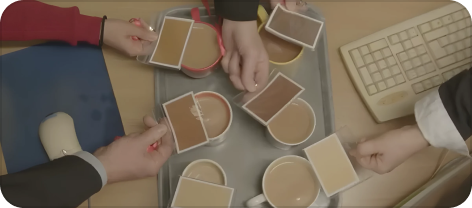
When tea samples arrive from around the world, the team set them in long rows, carefully slurping and assessing them in their hundreds. And of course, they’re also very rigorous in how they test our teas before they leave the building, tasting every batch with and without milk, and in hard and soft water, to make sure it’s always perfect.
So, we thought you might like a glimpse into how to taste tea like a pro. How to prepare, how to slurp and what kind of flavours and sensations to look out for.
We’re going to do that with the help of our Head of Tea Buying and Blending, Suzy Garraghan. She’s been working here for over a decade, and knows everything there is to know about tea tasting.
Suzy said: “It’s really fun to do a tea tasting at home – you get to bring people together and you might even settle a few arguments!
“Say you’ve got a friend who drinks one brand, while you drink Yorkshire Tea, you could have a tea tasting with your mates and decide which is the best everyday black tea. Or maybe you want to taste a variety of teas – like a black tea, a green tea and a fruit tea.”
What to look for
Over to Suzy to share the signs of a good – or bad! – cup of tea.
Briskness
When you have a cup of tea and you just think, ‘that really hits the spot, that’s really refreshing’, usually that’s because of briskness. You get a really pleasant sensation on the side of your tongue, where the flavour feels really satisfying. If your tongue feels really dry and bitter, that’s not a brisk tea. That’s tea that’s quite lacking.”
Richness
“What you want is a tea that leaves you feeling satisfied. That’s often to do with richness and pungency. That’s felt on the top of the tongue, that’s richness… it sort of hits the palate a bit harder.”
Body
“This is about the texture. Roll the tea around on your tongue and you’ll get an idea of the texture - we’d call that the body, or weight. You don’t want it to feel thin, you want it to feel substantial and satisfying. That means it’s really good quality.”
Brightness
“A white mug is great. The whiteness contrasts with the tea - when you’re visually inspecting tea, you want to be able to assess the brightness.”
The tea-tasting process
We’ll touch on how to make a proper brew here, but if you want more details, we have a full guide to getting it right.
Make it consistent
Suzy said: “You’re all going to get the same size mug, and the same amount of water. Measure it out. And you’re using freshly boiled water for everything.
Brew for five minutes
“Brew it all for exactly the same time. Time it on your phone for five minutes – then you’re going to get the teas at their optimum.”
Add milk (if you’re using it)
“Add the same amount of milk – maybe using the same size spoon. If you do it that way, as you plan to drink it, you’re going to get a much more recognisable experience.”
Give it a slurp
“Use a spoon to slurp it up and taste it. Use something like a soup spoon and slurp up the tea really sharply. Roll it around on the tongue to get an idea of the body and the weight. Nobody wants a tea that’s really thin and like water; you want a bit of body and pungency.”
Mix it up
“If you want to taste a variety of teas – say, this black tea, this green tea and this fruit tea – then you’d brew them all with freshly boiled water, in the same size mug, but follow the instructions on the pack. As long as you’re brewing in the ways that they’re advised, with the same volume, that should give you the same conditions. And you should try to taste the stronger flavoured ones last.”
Get technical
“If you want to be really technical, you could open the teabag and do it as we do in the tasting room.
“Break open some teabags (or use loose leaf) and measure 5.6g and then pour hot water on it and brew it for 5 ½ minutes. Next, strain the liquid into a small white bowl.
“You can also squeeze the tea leaves and display those on a little saucer. The brighter and copperier the tea leaves are, the better the quality of the tea. If it looks dull and grey, that’s a sign of worse quality.”
Flavours you might find, by tea type
When you’re tasting your tea, look out for a varied flavour profile. Depending on the tea you’re drinking, it could have the following notes:
- Black tea: brisk, malty, astringent, rich, pungent, sweet, smoky, bitter, spicy, floral
- Oolong tea: floral, fruity, roasted, creamy, honeyed, buttery, sweet, woody, toasty, mineral
- Green tea: grassy, vegetal, umami, sweet, astringent, nutty, floral, seaweedy, fresh, herbaceous
- Fruit tea (tisane): fruity, tart, citrussy, sweet, tangy, bright, refreshing, zesty, floral

